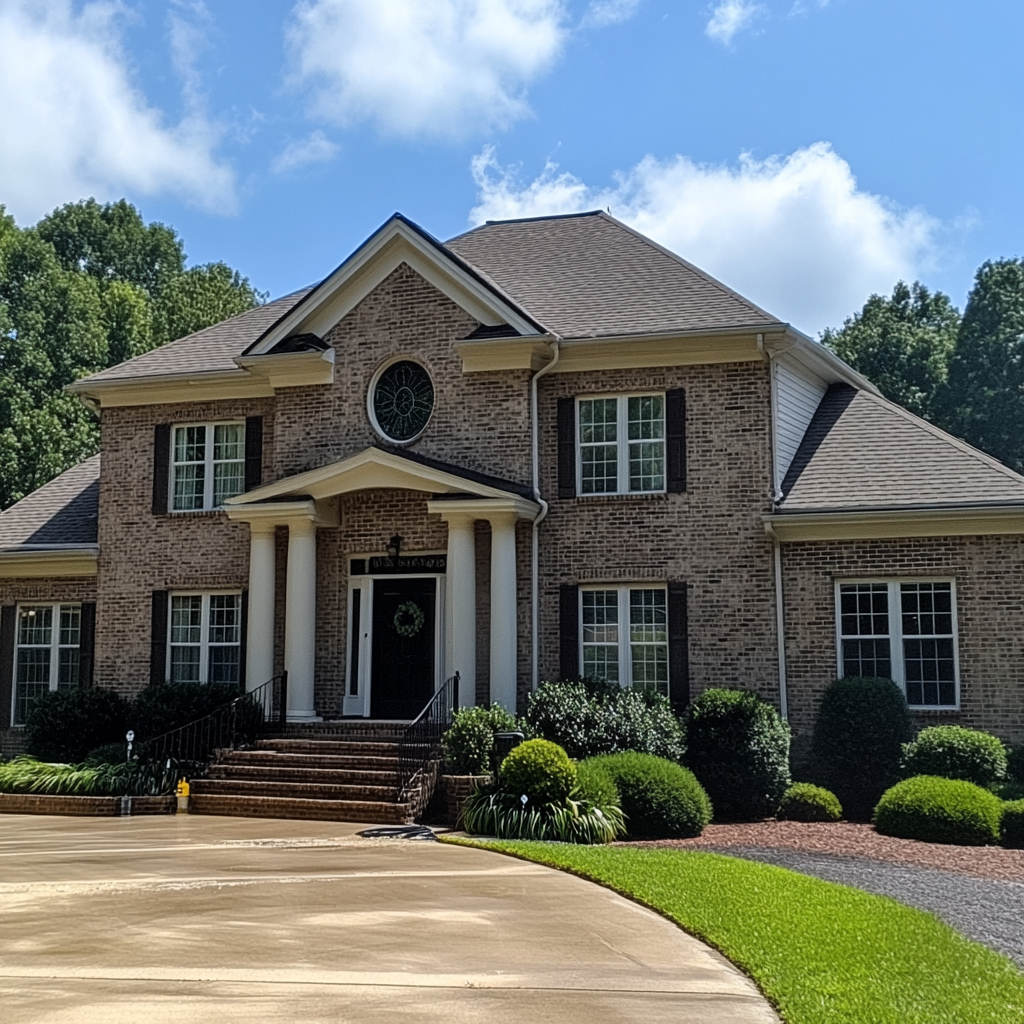
If you’ve ever noticed that your home looks clean after pressure washing—only to see green algae creeping back months later—you’re not imagining things. In Raleigh, NC, some homes experience algae regrowth far faster than others, even when they’re cleaned at the same time. The difference isn’t luck. It’s a combination of climate, environment, materials, and cleaning method.
Understanding why algae returns so quickly on certain properties can help homeowners protect their exterior surfaces, extend the life of their siding and concrete, and make smarter decisions about maintenance. At MayDay Power Wash and Lawn Care, this is something we see every week across Raleigh, Cary, Wake Forest, and surrounding areas—and the causes are more predictable than most homeowners realize.
Raleigh’s Climate Creates the Perfect Environment for Algae Growth
Raleigh’s humid subtropical climate plays the biggest role in how fast algae returns. Warm temperatures, frequent rainfall, and high humidity create ideal conditions for organic growth to thrive. Unlike dirt or dust, algae is a living organism. As long as moisture and shade are present, it will continue to spread.
Homes in central North Carolina rarely experience long dry seasons that naturally kill algae spores. Instead, moisture lingers on siding, roofs, driveways, and shaded concrete—especially during spring and summer. This is why homes in Raleigh often need exterior cleaning more frequently than homes in drier or colder climates.
What many homeowners don’t realize is that even during cooler months, algae doesn’t disappear. It goes dormant, waiting for the right conditions to return. Once temperatures rise and humidity increases, regrowth can happen quickly—sometimes within weeks if the underlying causes aren’t addressed.
Shade and Tree Coverage Make a Major Difference
One of the most common reasons algae returns faster on some Raleigh homes is tree coverage. Neighborhoods with mature trees—while beautiful—create shaded areas that prevent surfaces from drying fully. Algae thrives in shade because UV exposure helps slow its growth.
Homes with:
- North-facing walls
- Dense tree canopies
- Limited airflow between houses
are far more likely to see algae return quickly. We often notice that even on the same home, one side stays clean much longer while another turns green again. The difference is almost always sunlight and airflow.
In areas like Wake Forest and older Raleigh neighborhoods with established landscaping, algae regrowth is especially common on siding, fences, and concrete that rarely see direct sun.
Surface Materials Affect How Long Algae Stays Away
Not all exterior surfaces are created equal. Some materials are more porous, meaning they absorb moisture and provide a better environment for algae to attach and grow.
Common surfaces where algae returns faster include:
- Vinyl siding with textured finishes
- Painted wood siding
- Older concrete and pavers
- Brick with worn or aging mortar
Porous surfaces trap moisture beneath the surface, which allows algae to regrow even after the surface looks clean. This is why improper cleaning methods often fail to provide long-lasting results.
At MayDay, we frequently see homes that were pressure washed previously but still experience fast regrowth because the cleaning only removed surface discoloration—not the algae spores embedded in the material.
Pressure Washing vs. Soft Washing: Why Method Matters
One of the biggest factors in algae regrowth is how the home was cleaned.
Traditional pressure washing relies on high-pressure water to blast away visible buildup. While this can make a surface look clean initially, it often fails to kill algae at the root. In some cases, pressure washing can actually make the problem worse by forcing moisture deeper into porous surfaces.
Soft washing, on the other hand, uses low pressure combined with specialized cleaning solutions designed to eliminate organic growth at the source. This method treats the algae biologically, not just cosmetically.
In Raleigh’s humid climate, soft washing consistently lasts longer than pressure washing alone. That’s why MayDay uses soft washing for siding, roofs, fences, and other delicate surfaces—especially on homes prone to rapid regrowth.
Poor Drainage and Moisture Retention Around the Home
Another overlooked factor is water management. Homes with poor drainage, clogged gutters, or areas where water pools near foundations tend to experience faster algae growth.
Common moisture issues we see include:
- Overflowing gutters soaking siding
- Downspouts draining near walkways or driveways
- Soil graded toward the house
- Lawn irrigation hitting siding repeatedly
When moisture constantly contacts exterior surfaces, algae growth accelerates. Even the best cleaning job won’t last if water continues feeding organic buildup.
This is why professional exterior cleaning should always consider the entire property, not just the surface being cleaned.
Why Some Homes Need More Frequent Cleaning Than Others
Many homeowners assume there’s a “one-size-fits-all” cleaning schedule. In reality, how often your home needs soft washing or pressure washing depends on multiple factors working together.
Homes that typically require more frequent cleaning:
- Heavily shaded properties
- Homes near wooded areas
- Houses with older siding or concrete
- Properties with limited airflow
At MayDay, we help homeowners in Raleigh determine realistic maintenance intervals based on their specific property—not a generic recommendation. This approach helps prevent regrowth instead of constantly reacting to it.
DIY Cleaning Can Accelerate Regrowth
Surprisingly, DIY exterior cleaning is one of the top reasons algae returns quickly. Homeowners often use store-bought cleaners or diluted bleach solutions that remove surface stains but don’t fully eliminate spores.
In some cases, improper mixtures or excessive pressure can damage siding or concrete, making it even more susceptible to algae in the future. Once the protective surface layer is compromised, moisture penetrates more easily—and regrowth speeds up.
Professional soft washing uses precise ratios, controlled dwell time, and surface-specific techniques that homeowners typically don’t have access to.
Why Professional Soft Washing Lasts Longer in Raleigh
The key difference between a short-term clean and long-lasting results is experience. Knowing how Raleigh’s climate, tree coverage, and surface materials interact allows professionals to choose the right method for each home.
At MayDay Power Wash and Lawn Care, we don’t just clean—we evaluate:
- Sun exposure
- Surface condition
- Drainage patterns
- Organic growth severity
This allows us to apply treatments that slow regrowth and protect your home’s exterior for as long as possible.
When to Schedule Your Next Cleaning
If algae seems to return quickly on your home, it’s usually a sign that the root cause wasn’t fully addressed—or that your property needs a customized maintenance plan.
Early spring and late fall are ideal times for soft washing in Raleigh. Cleaning before peak humidity season helps prevent algae from gaining a foothold, while fall cleaning removes buildup before moisture gets trapped over winter.
The Bottom Line for Raleigh Homeowners
Algae doesn’t return faster on some homes by accident. It’s the result of environmental factors, surface materials, moisture exposure, and cleaning methods. Understanding these factors helps homeowners protect their investment and avoid repeated frustration.
If you’re tired of seeing green stains return again and again, working with a local professional who understands Raleigh’s unique conditions makes all the difference. MayDay Power Wash and Lawn Care helps homeowners throughout Raleigh, Cary, Wake Forest, and surrounding areas keep their exteriors cleaner, longer—with safe, effective soft washing solutions designed for our climate.
A cleaner home isn’t just about appearance—it’s about protecting the surfaces that protect your home.