City inspections are designed to protect public safety, ensure compliance with local regulations, and maintain community standards—but for many commercial property owners, inspections fail for reasons that have nothing to do with interior operations. In Raleigh and throughout Wake County, exterior maintenance issues are one of the most common—and most preventable—causes of failed city inspections. From overgrown landscaping to slippery sidewalks and neglected building exteriors, small oversights can quickly become compliance violations that delay approvals, create liability, and damage your business reputation.
Understanding how exterior conditions factor into inspections is critical for property managers, business owners, and commercial landlords who want to stay compliant and avoid costly re-inspections or fines.
How Exterior Maintenance Impacts City Code Compliance
City inspectors don’t just evaluate what happens inside your building. They assess how your property affects public safety, accessibility, and neighborhood appearance. In Raleigh, exterior conditions fall under multiple regulatory areas, including building codes, zoning ordinances, fire safety requirements, and ADA compliance standards.
When exterior maintenance is neglected, inspectors may flag issues such as obstructed walkways, unsafe surfaces, poor drainage, or overgrown vegetation. These violations can trigger inspection failures even if your interior systems are fully compliant.
Exterior maintenance isn’t cosmetic—it’s functional, safety-related, and legally relevant.
Overgrown Landscaping and Vegetation Violations
One of the most common inspection failures involves unmanaged landscaping. Overgrown grass, shrubs, and tree limbs may seem minor, but they often violate city ordinances when they obstruct visibility, signage, walkways, or access points.
In commercial settings, inspectors frequently cite:
- Bushes blocking fire lanes or emergency access
- Tree limbs interfering with building entrances or parking areas
- Vegetation obstructing signage or address visibility
- Unmaintained grounds attracting pests or creating trip hazards
Routine commercial lawn care—including mowing, trimming, edging, and limb management—helps prevent these issues before they become inspection failures. In fast-growing climates like Raleigh’s, properties can fall out of compliance quickly without consistent maintenance.
Slippery Sidewalks and Walkway Safety Issues
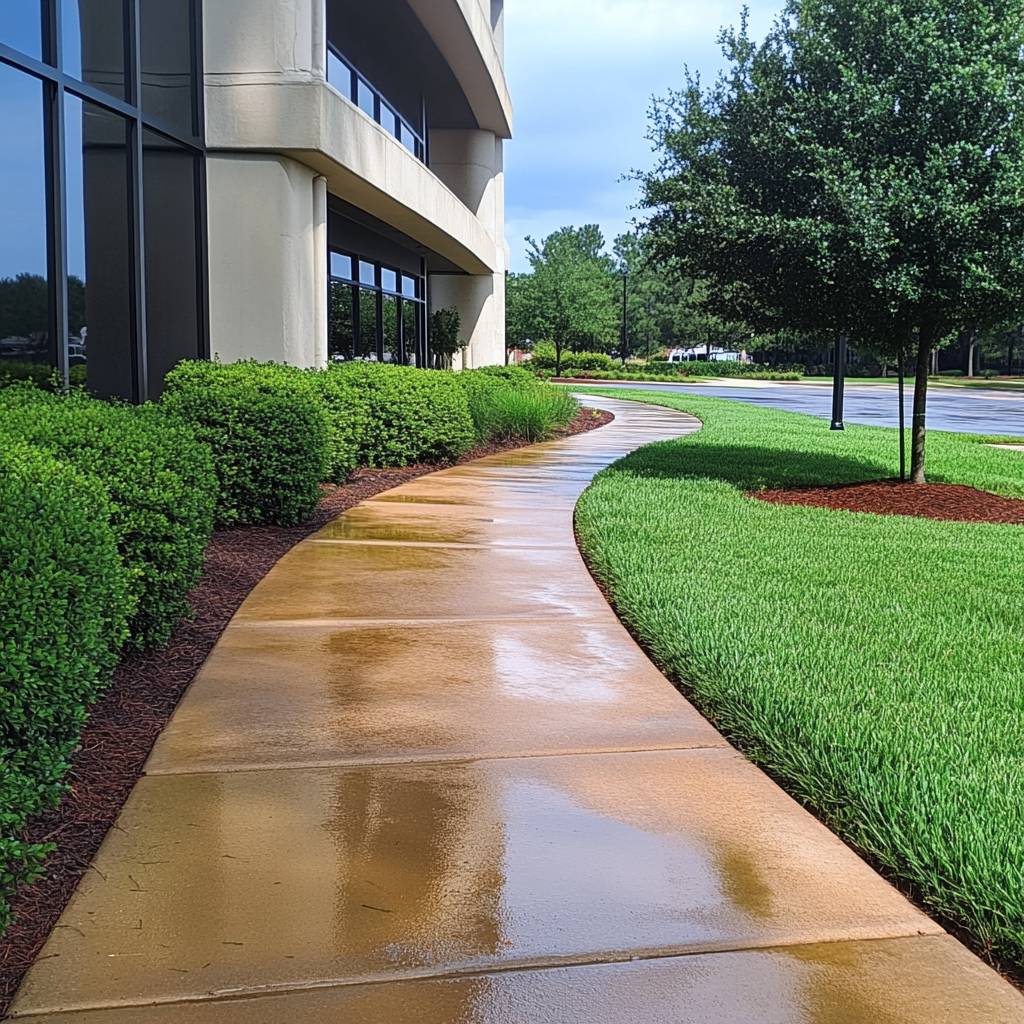
Sidewalks, entryways, and common walk paths are a major focus during inspections because they directly impact public safety. Algae, mildew, and grime buildup on concrete surfaces are especially problematic in humid North Carolina conditions.
Inspectors commonly fail properties for:
- Slippery algae-covered sidewalks
- Stained or uneven walkways that create trip hazards
- Grease or oil buildup near service areas
- Poor drainage causing standing water
These conditions are more than eyesores—they’re liability risks. A single slip-and-fall incident can result in lawsuits, insurance claims, and inspection scrutiny. Regular commercial pressure washing removes organic growth and residue, helping properties meet safety standards and reduce risk.
ADA Compliance and Exterior Accessibility Problems
Accessibility violations are among the most serious inspection failures commercial properties face. ADA standards apply to exterior areas just as much as interior spaces, including parking lots, ramps, sidewalks, and entrances.
Exterior ADA-related inspection failures often include:
- Blocked or overgrown access routes
- Uneven or slippery ramps
- Debris or staining in designated pathways
- Poorly maintained curb cuts or entry areas
Routine exterior cleaning and grounds maintenance help ensure these areas remain clear, safe, and compliant. Power washing sidewalks and maintaining surrounding landscaping plays a direct role in meeting accessibility requirements.
Mold, Mildew, and Staining on Building Exteriors
Inspectors also evaluate building exteriors for signs of deterioration or neglect. Mold, mildew, and algae growth on siding, stucco, brick, or signage can indicate moisture issues and material breakdown.
Common red flags include:
- Dark streaking on building facades
- Mold growth near windows, doors, or rooflines
- Stained signage or awnings
- Organic buildup on exterior walls
These issues can lead inspectors to question structural integrity or drainage systems. Commercial soft washing is often the safest and most effective way to remove this buildup without damaging exterior materials, particularly on painted or delicate surfaces.
Poor Drainage and Debris Accumulation
Improper drainage is another frequent inspection concern. When debris, leaves, and organic material clog drainage paths, water pools around buildings, walkways, or parking areas.
Inspectors may cite:
- Standing water near entrances
- Blocked storm drains
- Debris buildup around foundations
- Mud or erosion issues caused by runoff
Routine debris removal, yard cleanup, and exterior surface cleaning help maintain proper water flow and reduce inspection risks—especially after storms or seasonal leaf drop common in the Raleigh area.
Fire Safety and Exterior Clearance Issues
Fire inspectors often work in conjunction with city inspectors, and exterior maintenance plays a role here as well. Vegetation or debris near buildings can create fire hazards or obstruct emergency access.
Violations include:
- Landscaping too close to structures
- Debris accumulation near utility areas
- Blocked fire lanes or hydrants
- Poorly maintained exterior access points
Maintaining clean, clear perimeters is essential for passing inspections and ensuring emergency readiness.
Why DIY or Inconsistent Maintenance Falls Short
Many commercial properties attempt to manage exterior maintenance in-house or on an inconsistent basis. While this may seem cost-effective, it often leads to missed details that inspectors notice immediately.
Inconsistent maintenance can result in:
- Uneven cleaning and overlooked problem areas
- Incorrect pressure washing that damages surfaces
- Temporary fixes instead of long-term solutions
- Missed seasonal issues like algae regrowth or rapid plant growth
Professional commercial maintenance providers understand inspection criteria and tailor services to meet compliance standards, not just visual appeal.
How Professional Exterior Maintenance Supports Inspection Success
Working with an experienced commercial exterior maintenance team helps ensure your property is inspection-ready year-round—not just before scheduled visits. A professional approach includes:
- Routine lawn care and vegetation management
- Scheduled pressure washing for sidewalks and entrances
- Soft washing for building exteriors and signage
- Proactive identification of problem areas
- Documentation and consistency inspectors appreciate
In Raleigh and surrounding communities like Cary, Durham, Wake Forest, and Apex, properties face rapid organic growth due to humidity and seasonal weather shifts. Proactive maintenance isn’t optional—it’s essential.
Why Commercial Property Owners Trust MayDay
At MayDay Power Wash and Lawn Care, we work with commercial property owners, HOAs, retail centers, and office buildings to help them avoid inspection failures tied to exterior maintenance. Our teams understand how city inspectors evaluate properties and what issues commonly trigger violations.
By combining professional pressure washing, soft washing, lawn care, trimming, and debris removal, we help commercial properties stay compliant, safe, and visually professional throughout the year. Our experience in Raleigh and the surrounding areas allows us to anticipate regional challenges like algae growth, rapid vegetation cycles, and storm-related debris.
Final Thoughts: Exterior Maintenance Is Inspection Readiness
City inspections aren’t just about checking boxes—they’re about safety, accessibility, and accountability. Exterior maintenance plays a direct role in all three. Properties that fail inspections over exterior issues often do so not because of major neglect, but because of small, preventable problems that compound over time.
Regular commercial lawn care and exterior cleaning protect your investment, support compliance, and reduce risk long before an inspector arrives. When your property is clean, accessible, and well-maintained, inspections become a formality—not a setback.
If your goal is to pass inspections, protect your tenants, and present a professional image, exterior maintenance isn’t optional—it’s foundational.