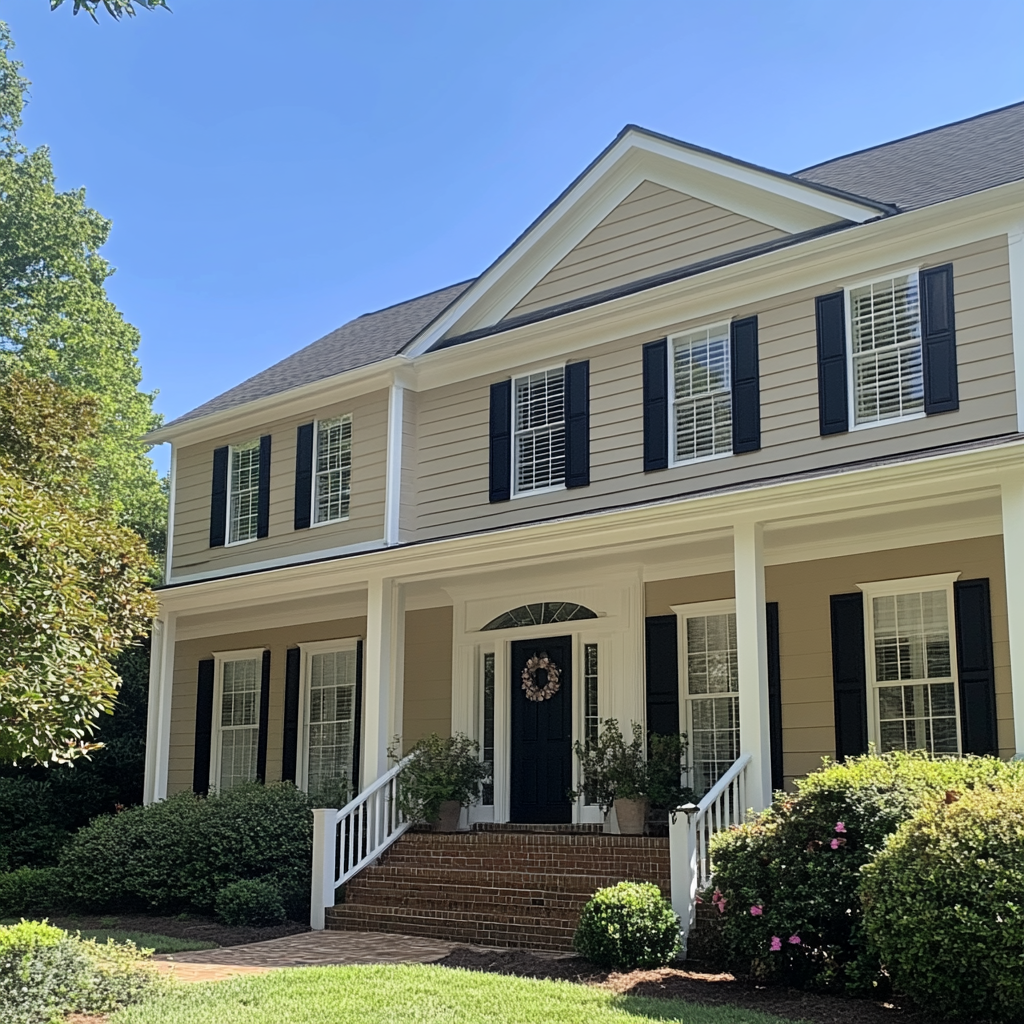
In humid regions like Raleigh and the surrounding areas, homeowners often notice a frustrating pattern: a freshly cleaned home looks great for a short time, but stains, algae, and mildew return far sooner than expected. While many assume this is just the nature of the climate, the real reason often comes down to how the property was cleaned.
Understanding why soft washing consistently outperforms pressure washing in humid environments can help homeowners make better long-term maintenance decisions, protect their exterior surfaces, and avoid unnecessary damage. At MayDay Power Wash and Lawn Care, we see the difference firsthand on Raleigh homes every day.
Humidity Changes the Rules of Exterior Cleaning
Humidity creates the ideal environment for organic growth. Algae, mold, mildew, and bacteria thrive where moisture lingers—especially on shaded siding, roofs, fences, and concrete. In climates like central North Carolina, moisture doesn’t evaporate quickly. Surfaces stay damp longer, giving spores time to grow and spread.
This means that exterior cleaning isn’t just about removing visible dirt. It’s about eliminating the biological growth at its source. That’s where the difference between pressure washing and soft washing becomes critical.
The Fundamental Difference Between Pressure Washing and Soft Washing
Pressure washing relies on high-pressure water to physically blast away surface buildup. While effective for hard, durable surfaces like certain types of concrete, pressure washing focuses on force, not treatment.
Soft washing, on the other hand, uses low pressure combined with specialized cleaning solutions designed to kill organic growth at a microbial level. The goal isn’t to strip the surface—it’s to treat it.
In humid climates, this distinction matters more than many homeowners realize.
Why Pressure Washing Often Fails in Humid Environments
Pressure washing can make a home look clean quickly, but it often doesn’t last in humid regions. Here’s why:
1. Pressure Washing Removes the Symptom, Not the Cause
Algae and mildew aren’t just surface stains. They root themselves into porous materials like vinyl siding, wood, brick, and concrete. Pressure washing may remove what you can see, but it often leaves behind living spores embedded in the surface.
In humid conditions, those spores reactivate quickly. Moisture feeds them, and within weeks—or even days—the discoloration returns.
2. High Pressure Can Drive Moisture Deeper Into Surfaces
Ironically, pressure washing can make regrowth worse. High-pressure water forces moisture into cracks, seams, and pores. In a humid climate, that trapped moisture doesn’t dry out easily.
This creates a perfect breeding ground for mold and algae to return faster and spread wider than before.
3. Surface Damage Accelerates Future Growth
Repeated pressure washing can wear down protective coatings on siding, concrete, and wood. Once that protective layer is compromised, surfaces absorb more moisture and become even more vulnerable to organic growth.
At MayDay, we often service homes that have been pressure washed for years and now experience rapid algae regrowth because the surfaces have become more porous over time.
Why Soft Washing Is Better Suited for Humid Climates
Soft washing is designed specifically to address the challenges of moisture-heavy environments.
1. Soft Washing Kills Organic Growth at the Root
Soft washing solutions are formulated to break down and eliminate algae, mold, mildew, and bacteria at a biological level. Instead of just removing discoloration, the treatment neutralizes the organisms causing it.
In humid climates, this is the key to longer-lasting results. When the growth is killed at the root, it takes significantly longer for it to return.
2. Low Pressure Protects the Surface
Soft washing uses the same pressure as a garden hose. This prevents surface damage, preserves protective coatings, and avoids forcing moisture into materials.
Because the surface remains intact, it dries more efficiently and resists future growth—an essential advantage in Raleigh’s humid conditions.
3. Longer Dwell Time Means Deeper Cleaning
Soft washing solutions are allowed to dwell on the surface long enough to penetrate pores and crevices. This controlled dwell time ensures that growth is fully treated instead of partially removed.
Pressure washing doesn’t offer this advantage—it’s a quick, force-based approach that rarely addresses what’s beneath the surface.
Why Soft Washing Results Last Longer on Raleigh Homes
In humid climates, longevity matters more than instant results. Soft washing typically keeps homes cleaner two to four times longer than pressure washing alone.
We see this consistently across Raleigh neighborhoods, from heavily wooded properties to suburban developments with limited airflow. Homes treated with soft washing stay cleaner longer because the environment that supports regrowth has been disrupted.
Soft Washing Is Safer for More Surfaces
Another reason soft washing is ideal for humid climates is its versatility. Many surfaces commonly affected by algae and mildew simply aren’t designed for high pressure.
Soft washing is safe for:
- Vinyl and fiber cement siding
- Painted wood
- Roof shingles
- Fences
- Stucco
- Brick and mortar
Using pressure on these materials can cause damage that leads to moisture retention—exactly what you don’t want in a humid region.
The Role of Climate-Specific Experience
Not all exterior cleaning companies understand how humidity impacts cleaning longevity. In drier climates, pressure washing may appear effective because surfaces dry quickly and growth slows naturally.
In Raleigh, Cary, Wake Forest, and surrounding areas, the climate works against shortcuts. Soft washing isn’t just a preference—it’s a necessity for lasting results.
At MayDay Power Wash and Lawn Care, we tailor every cleaning approach to local conditions. That means adjusting solutions, dwell time, and application methods based on shade, airflow, and surface type.
Why DIY Pressure Washing Often Leads to Faster Regrowth
Many homeowners attempt DIY pressure washing to save money, only to find themselves cleaning the same surfaces repeatedly. Store-bought equipment lacks the control and treatment capability required for humid environments.
Without proper solutions and surface evaluation, DIY pressure washing often:
- Leaves living spores behind
- Damages surfaces
- Traps moisture
- Shortens the time between cleanings
Professional soft washing addresses these issues in a single, properly executed treatment.
When Pressure Washing Still Has a Role
This doesn’t mean pressure washing is never useful. For durable surfaces like certain concrete areas, controlled pressure washing can be effective—especially when combined with proper post-treatment.
At MayDay, we often use a hybrid approach, pairing pressure washing where appropriate with soft washing to ensure long-lasting cleanliness across the entire property.
How Often Should Homes in Humid Climates Be Soft Washed?
There’s no universal schedule, but most Raleigh homes benefit from soft washing every 12–18 months, depending on tree coverage, shade, and moisture exposure. Homes in heavily wooded areas may require more frequent maintenance, while sunnier properties can go longer between cleanings.
A professional evaluation ensures you’re not over-cleaning—or waiting too long.
The Bottom Line for Homeowners in Humid Regions
In humid climates, the goal of exterior cleaning isn’t just appearance—it’s prevention. Pressure washing alone focuses on what you can see, while soft washing addresses what you can’t.
That’s why soft washing lasts longer, protects surfaces better, and provides superior value over time in moisture-heavy environments like Raleigh.
If you want your home to stay cleaner longer without risking damage, working with a local professional who understands the climate makes all the difference. MayDay Power Wash and Lawn Care provides safe, effective soft washing solutions designed specifically for Raleigh’s humidity—helping homeowners protect their property and avoid constant re-cleaning.
Clean surfaces shouldn’t be temporary. With the right method, they don’t have to be.